
What makes an argument ‘correct,’ or, at least, reasonable? We can debate about each other’s claims endlessly, and there’s an interdisciplinary field…
Farewell Post
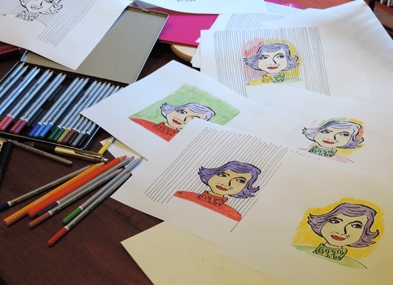
Image credit
Image by Hilda Bastian, CC BY-NC-ND 4.0
Experimenting with colors for the Absolutely Maybe logo feels like another lifetime. It was 2013, and this blog was launching on the Scientific American blog network. That was the year Google consigned the Google Reader to its digital graveyard, citing declining usage. That, says Dave Karpf, “was the end of the blogosphere’s long slide,” a slide that began when Twitter and Facebook “crowded into the blogosphere’s niche.”
I had started my first blog, Statistically Funny, in 2012, and it feels to me like I just managed to catch a bit of blogging’s heyday. I got to attend at least a couple of the last Science Online events, and they were exciting and lively. It didn’t feel like it was all in major decline, but in hindsight, I can see it must have been.
Scientific American downsized their blog network in 2014, and the health blogs were ditched, among others. I was thrilled to find a new home for Absolutely Maybe in PLOS’ Independent Blog Network. The Network had launched in 2010 with an amazing roster of bloggers—including Deborah Blum and Steve Silberman.
When I joined, there was a great reputation, but not the audience size of SciAm. It also didn’t have the ghastly web ads, though—like an ad for Alzheimer tests blasting all over a post I wrote critiquing dementia screening! I was far more ideologically aligned with my new blogging home, and I have always been proud to be associated with PLOS. (I was part of a couple of editorial advisory boards for PLOS journals, back in the day.)
In July 2026, PLOS’ Independent Blog Network ends, after an almost 16-year run, which is impressive. This is my final Absolutely Maybe post—the 330th; a rather satisfying number!
When I began blogging, I was working at the NIH. There, and for many, many years before that, most of the work that I produced was for community groups or government(-ish) organizations, without my name on it. And if work did have my name on it, it was as part of a collaborative effort. I’m a very talkative person—very!—but on the public record I was constrained, and the things I produced weren’t “mine.” Blogging was totally personal: I could talk in my own voice. I was cartooning, too, or working on images to communicate in other ways. Between that and the writing, there was regular space carved out for creativity in my life.
The stakes don’t feel as high in the informality of blogging, and there’s freedom in that. But because I was committed to producing two posts a month here, there was discipline, and that regular writing for well over a decade gave me so much. I had to think through so many topics to write about them, and it was great intellectual exercise. I learned a lot, including about writing.
Blogging doesn’t carry the same weight in my life now that I write a lot anyway, so this isn’t a sad farewell. And I know that people who want to get started in this kind of science communication have lots more options these days. However, there was one thing I found I didn’t want to let go of when I heard Absolutely Maybe was going to end—tracking next generation Covid vaccine development. By the time the pandemic was declared in March 2020, I had already written my first Covid vaccine post, and I’ve racked up 77 posts tagged with that theme. I wrote about the wild ride of those first couple of years here. Many of you have followed along, and I hope you still will, as I transition it to a free-standing project, at the NextGen Covid Vax Tracker. And if you’re interested in seeing what else I’m doing, I have a personal newsletter.
I will always be deeply grateful to PLOS for this absolutely wonderful experience. I don’t know how many hundreds of thousands of words I wrote, or how many hours of readers’ time was spent on them, but I know it’s an awful lot. Thank you to all of you.
 | Check out the new NextGen Covid Vax Tracker! |
 | Hilda’s personal newsletter: Living With Evidence |